
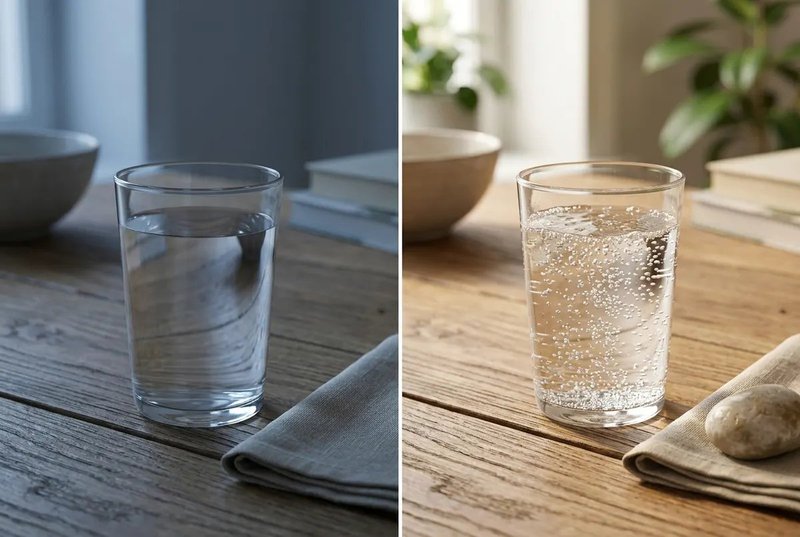
Your water looks clear.
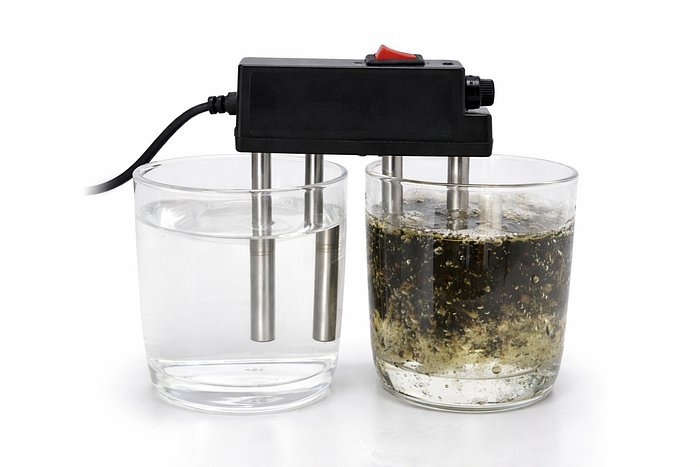
Then a salesperson plugs in a small device, dips two metal rods into the glass, and suddenly it turns brown, green, almost black.
They point at the sludge and say: This is what your family has been drinking.
It’s a terrifying demo … and that’s exactly why it works.
Most people don’t realize they are not watching a real water-quality test. They are watching a chemistry trick designed to create fear. And this is not just an old in-home sales tactic anymore. Search online for terms like “water electrolyzer for quality test” or “water electrolyzer,” and you’ll find similar devices sold as quick, visual ways to judge water purity. But the ugly color change does not usually prove your water is toxic or unsafe. In many cases, it simply shows electricity reacting with metal electrodes and the natural dissolved minerals already present in normal water.
Why this demo works so well
The scam is powerful because it turns an invisible worry into a visible shock.
Real water problems are usually not dramatic. Lead does not make your water suddenly turn black in a glass. PFAS does not create instant sludge. Bacteria do not announce themselves with foamy brown water on your kitchen table.
But a salesperson can create that visual in seconds.
And once people see clear water become disgusting-looking water, the sale becomes emotional instead of rational.
That pattern has been described for decades: offer a “free” in-home test, run a dramatic demonstration, identify a frightening “problem,” then push an expensive treatment system before the homeowner has time to verify anything independently. Utility guidance explicitly warns that these tests are sales tactics and that most potentially harmful contaminants cannot be tested accurately in the home this way.
What the device actually is
The device often used in these demos is commonly called an electric precipitator or water electrolyzer.
It usually contains metal rods, often iron or aluminum, connected to electricity. When the rods are placed into water and switched on, an electrochemical reaction begins.
That sounds technical, but the key point is simple:
The sludge is not mainly being pulled out of your water.
It is largely created by the device itself.
Public utility guidance says exactly that: the dark sludge is caused by electricity decomposing the rods, and the device is a sham even though it is visually convincing.
And yes, you can still find these devices online
This is not just an old door-to-door trick.
Search online for terms like “water quality tester,” “water electrolyzer,” or “quick water quality tester,” and you’ll find similar devices sold on major marketplaces. Full Fact noted that similar-looking electrolysis models are readily available online, which helps explain why the device still looks credible to many people.
That matters because online availability can create a false sense of legitimacy.
But being easy to buy does not make a device scientifically valid.
A product can be widely sold and still be misleading when used as a supposed proof that your water is dangerous. That is exactly the problem here. Experts have repeatedly said these electrolysers are not reliable tools for assessing whether water is safe to drink.
Why does the water turn brown, green, or black
Because the metal rods start reacting.
The fact is that the color change is likely caused by electrolytic corrosion of the metal electrodes. Iron can dissolve and create brown rust-like compounds, while other metals may contribute green or darker tones.
Distilled water often stays clearer because it conducts electricity poorly.
AAP FactCheck reported the same conclusion from chemistry experts: these devices are not designed to assess water quality, and the color change is likely due to oxidation of the electrode material, including the formation of ferric hydroxide, essentially rust.
The sequence is usually this:
- Your tap water contains dissolved minerals
- Those minerals help the water conduct electricity
- Electricity drives reactions at the metal rods
- The rods corrode
- The water changes color
That is chemistry.
It is not proof that your water is contaminated with hidden toxins.
The “pure water” comparison is the cleverest part of the trick
This is where the demo becomes especially deceptive.
The seller tests your tap water first. It changes color.
Then they test their own “filtered” or “purified” water. It stays much clearer.
The message is obvious:
“your water = dirty …………………………………..their water = pure”
But that is not what the demonstration proves.
A much more honest interpretation is this:
Your water contains dissolved minerals, so it conducts electricity more easily… their low-mineral water reacts less under the same conditions
The device mainly shows that tap water is not distilled, not that it is unsafe.
And that distinction matters. Normal drinking water often contains minerals such as calcium and magnesium. Their presence does not automatically mean the water is harmful. In many cases, they are simply part of ordinary tap water. Utility guidance also warns that some sales tactics visually exaggerate harmless minerals to make people panic.
One simple way to expose the gimmick
One of the biggest clues that this test is misleading is what happens if you add salt to the seller’s “pure” water.
Salt increases conductivity.
And once conductivity rises, the same kind of ugly reaction can happen there too.
Reports describing this scam note that when salt is added to the supposedly clean sample, it can also start darkening during the test. That shows the effect is tied to conductivity and electrode reactions, not to some magical detection of invisible toxins.
That does not mean salt is a real water test.
It means the original demo never measured water safety in the first place.
What this test does not tell you
This is the part homeowners need to remember.
The sludge demo does not reliably tell you:
- whether your water contains lead
- whether it contains bacteria
- whether it contains PFAS
- whether it contains pesticides
- whether it is safe to drink
- whether you need reverse osmosis
Proper water-quality assessment requires specialized methods for parameters like pH, turbidity, dissolved oxygen, chemical composition, heavy metals, and microbial contamination. Those tests are done in proper laboratories by trained professionals using standardized procedures.
Utility and consumer guidance say that most potentially harmful contaminants cannot be accurately tested in your home by a salesperson using a dramatic demo device.
This doesn’t mean all filters are useless
To be clear, this article is not anti-filter.
Some filters are absolutely worth having, but only when they solve a real, verified problem. The mistake is not buying a filter. The mistake is buying one because a fake demo scared you. Good decisions come from water reports, plumbing realities, and clearly defined treatment goals, not from brown sludge in a glass.
How to stop this scam in the moment
If someone uses this test in your home, don’t try to win a chemistry argument.
Just say this:
“This demo does not prove my water is unsafe, and I’m not making a buying decision today.”
That single sentence does two important things at once: it rejects the fake conclusion, and it stops the pressure sale.
If you want to push back further, remember these rules:
- Don’t let the brown sludge decide for you. A dramatic reaction is not proof of contamination. Experts and public guidance have warned that this device can create sludge from electrode reactions, not from hidden danger in the water.
- Don’t argue about what the sludge “means.” A scammer can say it shows iron, salt, lead, chemicals, or “toxins.” That still does not make the test valid. These devices do not reliably identify specific contaminants.
- If you want to expose the trick, challenge their “pure” water. Ask them to repeat the test after adding a small pinch of table salt to their own purified sample. If that water starts changing color too, the illusion falls apart: the device is reacting to conductivity and the electrodes, not magically detecting toxic contamination. Reports describing this scam specifically note that adding salt to the “clean” sample can trigger the same ugly reaction.
- Don’t buy the same day. The scam depends on urgency, not evidence. Don’t buy…….Don’t buy…….Don’t buy…….Don’t buy…….Don’t buy.
- Verify everything later, not during the demo. If you still have real concerns, check your water report, send a sample to a certified lab, and compare filters calmly on your own terms. That is how you separate a genuine water issue from a dramatic sales trick.
That’s how you take control back.
Quick Q&A
Does brown sludge in this test mean my water is unsafe?
No. The color change is often caused by corrosion of the electrodes and the conductivity of the water, not proof of dangerous contamination.
Why does tap water react more than distilled water?
Because tap water usually contains dissolved minerals that help conduct electricity, while distilled water contains very few ions.
Can this test detect bacteria or heavy metals accurately?
No. Proper water-quality testing for contaminants requires lab methods, trained professionals, and standardized analysis.
Is a TDS meter a better option?
For a fast, safe initial check, a TDS meter is more useful than an electrolysis gadget because it gives you a number for total dissolved solids instead of creating a scary visual show. But it still has limits: TDS does not tell you which substances are present, whether they are harmful, or whether your water contains bacteria, lead, PFAS, or pesticides. Think of it as a rough screening tool, not a safety verdict. For real concerns, you still need a utility report or laboratory analysis.
Final thought
This fake water test survives for one reason: it is emotionally powerful.
It takes an invisible worry and turns it into something you can see, fear, and react to in seconds. And for many homeowners, that fear becomes an expensive decision made in the worst possible moment.
But once you understand what is really happening, the illusion starts to collapse.
That brown, green, or black sludge is not automatic proof that your water is dangerous. More often, it is proof that someone is using a dramatic electrode reaction to sell you something.
So the next time you see this demo, don’t panic.
Slow the moment down.
Question the test.
And trust real evidence over staged theater.
And hey, we’ve been seriously helping peoplef or 26 years. Thousands of them. We’ve designed a system to fully handle Australian water problems. Learn more here: