
TL;DR
Molecular hydrogen is a real, measurable gas that can be dissolved in drinking water. But negative ORP, high pH, “active hydrogen” and claims about permanently smaller water clusters do not tell you how much H₂ you are drinking. Ask for direct measurements, a clear test method and honest evidence about health benefits.
After 26 years working with water, I have learned that a good question can be more useful than an impressive sounding answer.
That is especially true of hydrogen water. I am interested in molecular hydrogen. I also know how easily a real scientific idea can pick up a layer of marketing language until it is hard to tell what is being measured and what is merely being suggested.
Here is how I would explain the most important distinctions to an AlkaWay customer.
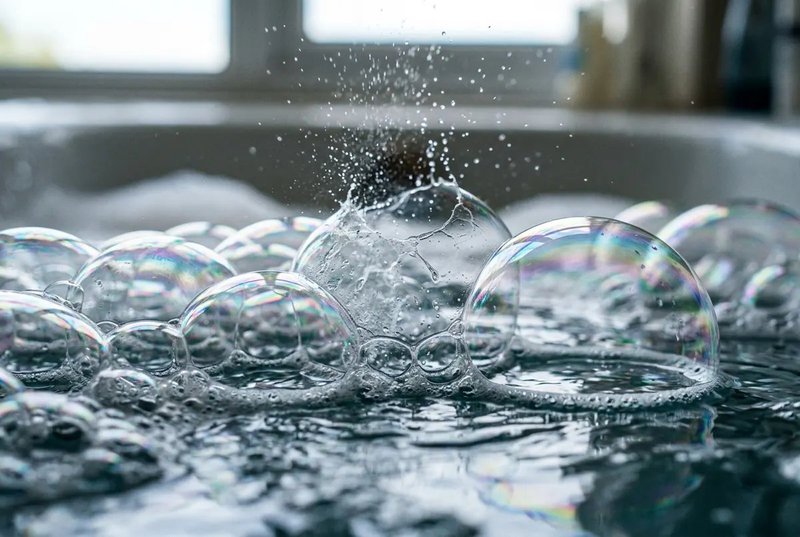
First, what is hydrogen water?
Ordinary water is H₂O. Hydrogen-rich water is water with some additional molecular hydrogen gas, H₂, dissolved in it. Those are two different things. You cannot look at the H in H₂O and assume every glass of water provides a useful dose of dissolved H₂.
Molecular hydrogen has attracted research interest because experiments suggest it may affect biological signalling and responses associated with oxidative stress and inflammation. That makes it worth studying. It does not make every product claim true, or turn a small study into a proven treatment.
If a product is sold for its molecular hydrogen, I want to know how much dissolved H₂ it actually provides under normal use.
Myth 1: “Active hydrogen” is the special ingredient
You may see a water product advertised as containing “active hydrogen.” It sounds exciting, but it does not clearly identify what is in the glass.
The hydrogen species we are discussing is H₂: two hydrogen atoms joined as a molecule. A free, individual hydrogen atom is extremely reactive. It is not a stable ingredient sitting in your water bottle waiting for you to drink it.
My advice is simple: ask for a measurement of dissolved molecular hydrogen, expressed in milligrams per litre (mg/L) or parts per million (ppm). In dilute water, those two units are approximately equivalent. If the answer is a slogan instead of a measurement, keep asking.
Myth 2: A negative ORP reading tells you the hydrogen dose
ORP stands for oxidation-reduction potential. It is a reading in millivolts taken with an electrode. A negative ORP reading can occur in hydrogen-rich water, but it is affected by other conditions, including pH and the way the measurement is made.
It does not mean the whole glass of water has acquired a lasting negative electrical charge. Nor can an ORP figure be converted reliably into a concentration of H₂.
This matters because a striking number on a meter can look like proof. If we are talking about molecular hydrogen, why use a proxy when we can test for the molecule itself?
Myth 3: Higher pH means more molecular hydrogen
Alkalinity and dissolved hydrogen are separate properties. A water system can raise pH without producing much H₂. Another method can add H₂ without making water strongly alkaline.
That does not make pH irrelevant. Mineral content and how water tastes can matter when choosing drinking water. Filtration matters too: adding hydrogen does not, by itself, remove unwanted contaminants from the water you start with. But I would not use a pH number to prove a hydrogen claim.
When comparing systems, first ask what job you want the water to do. Do you want filtration for the whole household, a convenient fresh serving of hydrogen water, or both? Then assess each function on its own evidence.
Myth 4: “Micro-clustered” or “hexagonal” water hydrates you better
Water molecules do interact and form brief arrangements through hydrogen bonds. That is fascinating science. The arrangements continually change. It is a much bigger claim to say a machine makes a permanent cluster that travels from the glass into your cells and hydrates you better.
I have been interested in the deeper properties of water for many years, and I do not think curiosity should be dismissed. But a commercial claim about superior human hydration needs its own evidence: what physical change was measured, how long did it last, and did people actually experience a measurable benefit?
At present, the idea of a stable, smaller cluster created by a consumer device is not a useful way to compare hydrogen water products. I would focus on the water quality and the dissolved H₂ that can be measured.
Myth 5: Hydrogen simply “wipes out” all free radicals
We often hear that molecular hydrogen is the world's most powerful antioxidant. That phrase is too tidy for a complicated subject.
Our bodies produce reactive molecules as part of ordinary life. Some can cause damage when present in excess. Others help with cell signalling, immune defence and adaptation. The aim is not to eliminate every free radical.
Early work helped establish interest in hydrogen as a selective antioxidant. Researchers now also examine whether its effects involve signalling and the body's own defence systems. The exact mechanisms are still being investigated. Describing H₂ as a little sponge that simply mops up everything misses that complexity.
The human research is promising in some areas, but studies vary in size, dose, method and outcome. A change in a laboratory marker is interesting; it is not automatically a meaningful health improvement for every person who drinks hydrogen water.
What I would ask before buying

Here are five questions I think every seller should be comfortable answering:
- How was the H₂ measured? Ask for a direct measurement, not just an ORP or pH reading.
- When was it measured? A result taken immediately after production may differ from the water when you actually drink it. Hydrogen gas can escape over time.
- What was the test setup? Water volume, cycle length, temperature and device settings can all affect the reported result.
- What is the serving size? A concentration alone does not describe the total amount of H₂ in a serving. At the same measured concentration, a larger volume contains more total H₂.
- What else does the product do? Filtration performance, materials, maintenance, ease of use and local support deserve attention alongside the hydrogen number.
At AlkaWay, we have different ways to approach drinking water. The UltraStream is for people who want a practical household filtration system with mineralised water and fresh hydrogen as part of its design. A portable H₂ bottle suits someone who wants to prepare a fresh personal serving. The right choice depends on your water, routine and budget. We should be able to explain what each option does and how its performance is measured.
My conclusion as a result of more than a decade.
I remain interested in molecular hydrogen because there is genuine research to follow. I’m equally interested in plain language and honest measurements. Good water products should be able to stand on what they actually deliver, without needing a story about permanently charged water or magical clusters.
If you’re comparing hydrogen water options, ask allthe awkward questions. I would much rather have a useful conversation about your water and the evidence than impress you with a millivolt reading that answers the wrong question.
This article is general information about water and emerging research. Hydrogen water is not an established treatment for a medical condition.