
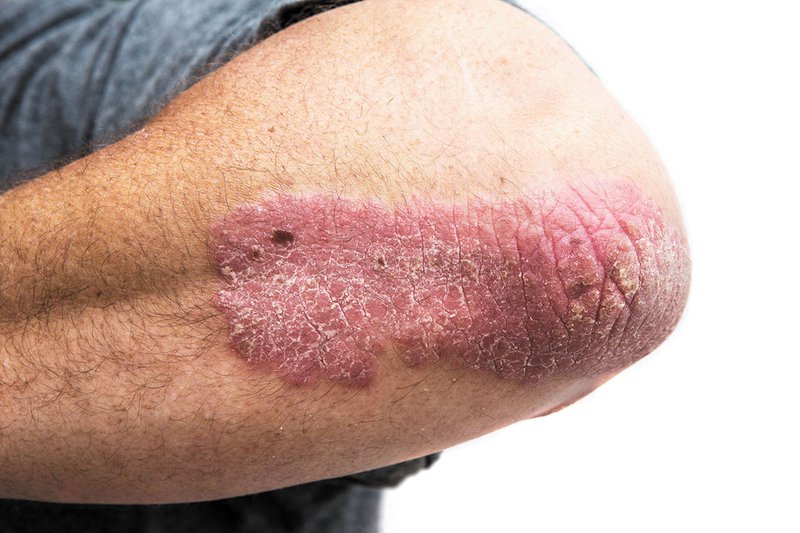
Most people recognise psoriasis by the patches it leaves on the skin.
These patches may be red, raised, itchy, cracked or covered with silvery scales. They can appear on the elbows, knees, scalp, hands and other parts of the body.
But psoriasis is not simply a skin problem.
It is a long-term inflammatory condition involving the immune system. What appears on the skin is the visible result of something more complicated happening underneath.
Researchers are now investigating whether molecular hydrogen may help influence some of this inflammation.
The early findings are interesting. However, molecular hydrogen has not been proven to cure psoriasis. Let’s look at what the research actually tells us.
What causes psoriasis?
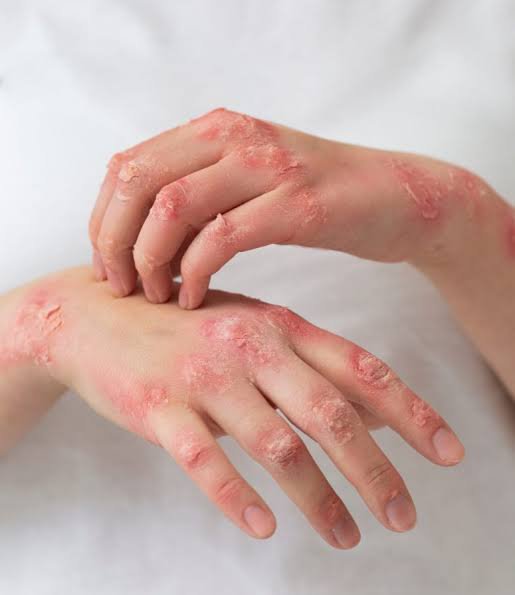
Our skin constantly renews itself.
Normal skin cells form beneath the surface. They gradually move upwards before being naturally shed. This process usually takes several weeks.
Psoriasis speeds everything up.
New skin cells may reach the surface within days. The body cannot shed them quickly enough, so they accumulate and form thick plaques.
However, fast-growing skin cells are not the original cause.
The process begins with an abnormal immune response.
Certain immune cells release inflammatory messages. These messages tell skin cells to grow faster. The affected skin then releases more chemical signals, attracting even more immune activity.
A loop develops:
- The immune system stimulates the skin.
- The skin produces more inflammatory signals.
- These signals attract more immune cells.
- The inflammation continues.
This helps explain why psoriasis often returns after a plaque has cleared.
It is about more than appearance
Psoriasis can affect far more than someone’s appearance.
Plaques may itch, burn, crack or bleed. They can interrupt sleep and make ordinary movements uncomfortable.
Psoriasis on the hands can make work difficult. Psoriasis on the feet may make walking painful. Plaques on the scalp and face are particularly difficult to hide.
The emotional effects can be just as serious.
Some people avoid swimming, social events or intimate relationships. Others become tired of strangers staring or offering unwanted advice.
Psoriasis is also associated with an increased risk of several other conditions. These include psoriatic arthritis, cardiovascular disease, metabolic problems, inflammatory bowel disease and depression.
This does not mean everyone with psoriasis will develop these problems. It does show why psoriasis should not be dismissed as a cosmetic issue.
Where does oxidative stress fit?
Every cell produces unstable molecules called reactive oxygen species.
These molecules have useful jobs. The immune system uses them to communicate and defend the body.
Trouble begins when the body produces more than it can safely control. This is called oxidative stress.
Research has found higher markers of oxidative stress in many people with psoriasis. Greater imbalance may also be associated with more active or severe disease.
Oxidative stress can damage fats, proteins and DNA inside cells. It may also activate inflammatory pathways and interfere with the normal skin barrier.
This creates another loop.
Inflammation produces oxidative stress. Oxidative stress can then encourage further inflammation.
Breaking that loop is one reason molecular hydrogen has attracted scientific attention.
What is molecular hydrogen?

Molecular hydrogen is a gas made from two hydrogen atoms. Its scientific name is H₂.
It is the smallest molecule in existence. This allows it to move through cell membranes and reach tissues throughout the body.
Molecular hydrogen can be dissolved in water. It may also be inhaled under controlled conditions or used in hydrogen-rich bathing water.
At first, scientists described molecular hydrogen mainly as an antioxidant. We now know the story may be more interesting.
Molecular hydrogen appears to influence cell signalling, inflammation and the body’s antioxidant defences. Rather than behaving like a powerful drug aimed at one target, it may gently influence several connected processes.
This does not make it a miracle treatment. It simply gives researchers several good reasons to investigate it.
What has been studied in people?

The most interesting human study involved hydrogen-rich bathing water.
Researchers followed 75 people with psoriasis or parapsoriasis en plaques. Forty-one added hydrogen-water bathing to their existing treatment. Thirty-four continued their usual treatment while bathing in ordinary water.
After eight weeks, 56.1% of the hydrogen-bathing group achieved at least a 50% improvement in their psoriasis severity score. Only 17.7% of the control group reached that result.
A smaller number achieved at least a 75% improvement. This occurred in 24.4% of the hydrogen group and 2.9% of the control group.
Itching also improved.
These results sound impressive, but we need to keep them in perspective.
The study was relatively small. Participants continued their existing treatments, and it was not a large, blinded, placebo-controlled trial. We cannot yet say how much improvement came directly from molecular hydrogen.
It is an encouraging study—not final proof. Read the study
An earlier report described three people with psoriasis and psoriatic arthritis who received different forms of molecular hydrogen. Improvements were reported in skin lesions, joint activity and some markers of inflammation.
Three cases can help researchers decide what to study next. They cannot tell us whether the same result would occur in most people. Read the case report
What have laboratory studies found?
Animal and cell studies allow researchers to look more closely at possible mechanisms.
In mouse models, hydrogen-rich bathing reduced psoriasis-like skin changes. Researchers also observed changes in inflammatory substances, including IL-17, IL-23 and TNF-alpha.
These substances play important roles in psoriasis. In fact, several modern psoriasis medicines work by targeting these inflammatory pathways.
Other experiments suggest molecular hydrogen may reduce excessive oxidative stress, calm certain immune cells and slow the abnormal growth of skin cells.
Scientists are also testing ways to produce molecular hydrogen directly within affected skin. Experimental microneedles and hydrogen-generating gels have shown interesting results in animals.
This research is clever and promising. But mice are not people, and experimental skin treatments are not yet normal consumer products.
Can drinking hydrogen water treat psoriasis?
We do not currently have strong evidence showing that drinking hydrogen-rich water treats psoriasis.
That is an important distinction.
Hydrogen bathing places the hydrogen in contact with the affected skin. Drinking hydrogen water delivers it through the digestive system. These are different methods, and we cannot assume they produce identical results.
Hydrogen-rich water is being investigated for its possible effects on oxidative stress and inflammatory signalling. These effects may eventually prove relevant to psoriasis.
For now, the correct word is may.
Anyone claiming that molecular hydrogen water cures psoriasis is running well ahead of the science.
Should molecular hydrogen replace psoriasis treatment?
No.
Modern psoriasis treatments can be extremely effective. They include medicated creams, vitamin D analogues, light therapy, oral medicines and biologic treatments.
Someone taking prescribed medication should not stop or change it because of an article about molecular hydrogen.
Psoriasis also varies enormously. A treatment that helps one person may do little for another.
Molecular hydrogen is best considered an area of developing research. If future studies confirm the early findings, it may eventually become a useful addition to established care.
That is very different from calling it a replacement.
The sensible conclusion
Psoriasis begins beneath the plaque.
It involves the immune system, inflammatory signals, oxidative stress and abnormal skin-cell growth. Treating only what we can see does not explain the whole condition.
Molecular hydrogen is interesting because it may influence several parts of this cycle. Early human research involving hydrogen-rich bathing is encouraging. Laboratory studies also offer plausible explanations for how it might work.
But the evidence remains preliminary.
We need larger, well-controlled human trials. Researchers must also determine the best delivery method, concentration, frequency and treatment period.
Until then, molecular hydrogen should be approached with curiosity rather than certainty.
It is not a proven psoriasis cure. It is a small molecule asking some very worthwhile scientific questions.